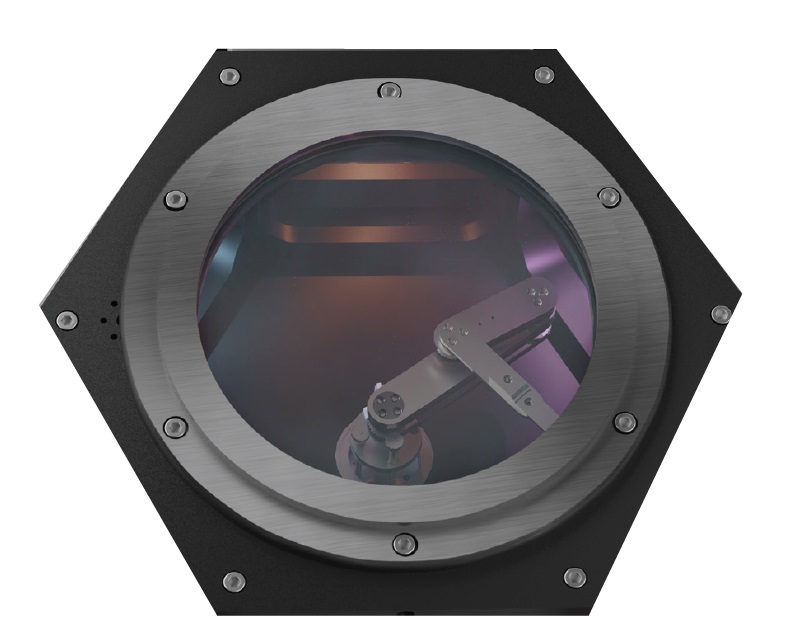
In PVD, solid material is vaporised in a vacuum chamber and then condensed onto a substrate, creating a thin, durable coating typically just a few micrometers thick. The process involves heating the coating material until atoms are released, which then travel through the vacuum and bond to the target surface.
In research and development, PVD is essential for depositing innovative materials and developing new technologies, with the ability to deposit materials from pure metals to alloys, nitrides, and carbides.This makes it a versatile technology for advanced materials research, opening new frontiers in fields from biomedicine to energy.
The HEX series of R&D PVD Systems support multiple deposition techniques including:
The HEX is the smallest fully modular system in the range. Enabling subtrates up to 4" in size and up to 3 deposition sources, the HEX is unique amongst its bencthop PVD rivals.
The HEX-XL is the biggest of the HEX series, allowing samples up to 12" and up to 6 deposition sources. The most flexible system in the range due to its increased size.
The HEX Cluster allows users to begin with a single HEX-L chamber, and then connect further HEX-L chambers later on for in-vacuum transfer of samples between them. This offers a unique modularity level not seen on other cluster systems.
The HEX series stands apart from conventional PVD systems through several key features:
Open-Frame Modular Architecture: Unlike conventional PVD chambers, the open-frame architecture gives users the freedom to reconfigure, upgrade and add their own instruments, with panels mountable in minutes with no specialist tools. With conventional PVD systems, the single-piece metal vacuum chamber prohibits retrofitting new ports and flanges, but the HEX’s detachable side panels mean the chamber architecture can be changed at any time.
User Accessibility: The HEX series is unique among thin film deposition systems due to its versatility, with its modular design allowing for customization and robust user control features. All essential elements are accessible, allowing testing of various components and thorough exploration of thin-film deposition processes.
Future-Proof Design: Users can start with a basic system and add capabilities as their research evolves or budget allows, without system downtime or expensive redesigns. The system is compatible with glovebox integration and can incorporate custom or third-party instruments.
This modular approach makes the HEX series particularly valuable for research, teaching, and facilities where needs may change over time.