Thermal evaporation, sometimes called resistive or boat evaporation, is one of the simplest and most established physical vapour deposition (PVD) techniques. It is widely used in research and teaching labs for depositing thin metal films, thanks to its low cost, simplicity and reliability.
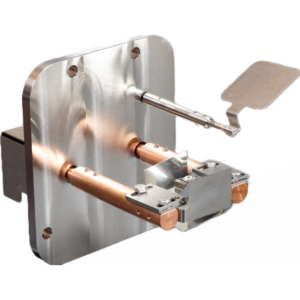
THE HEX SERIES
How does Thermal Evaporation Work?
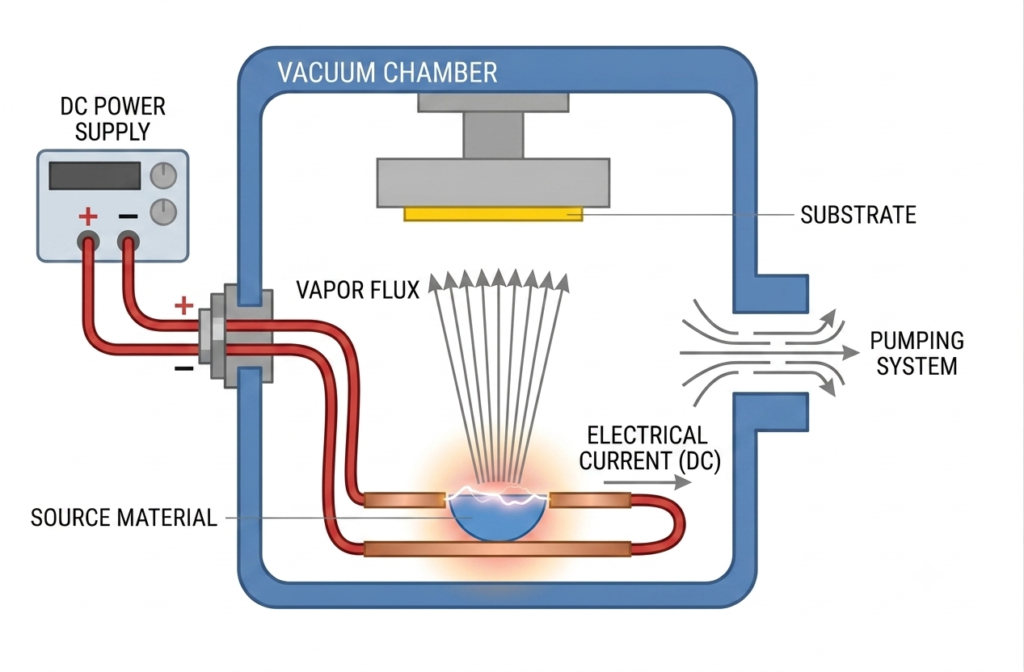
In thermal evaporation, the source material is placed in a container, such as a filament, boat or crucible, made from a refractory metal like tungsten, tantalum or molybdenum. Inside a vacuum chamber, a high electrical current is passed through this container, causing it to heat up resistively. As the temperature rises, the source material melts and evaporates (or sublimes), and the resulting vapour travels in straight lines – a line-of-sight process – until it reaches and condenses on the substrate, forming a thin film.